IN PARTNERSHIP WITH:

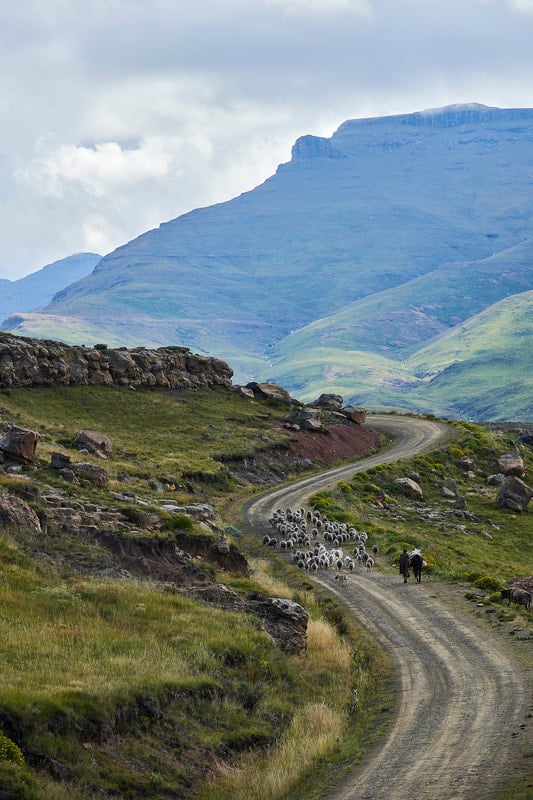
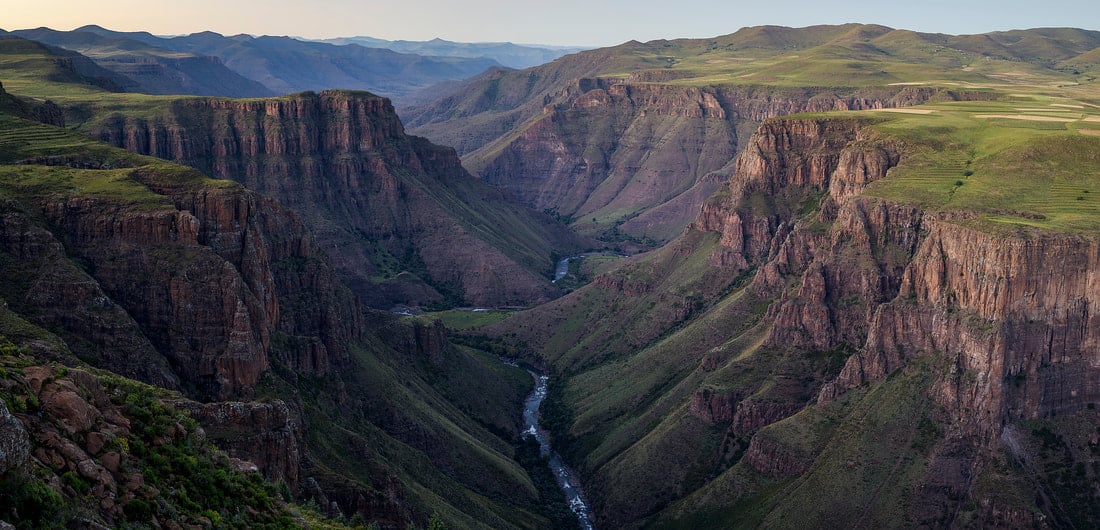
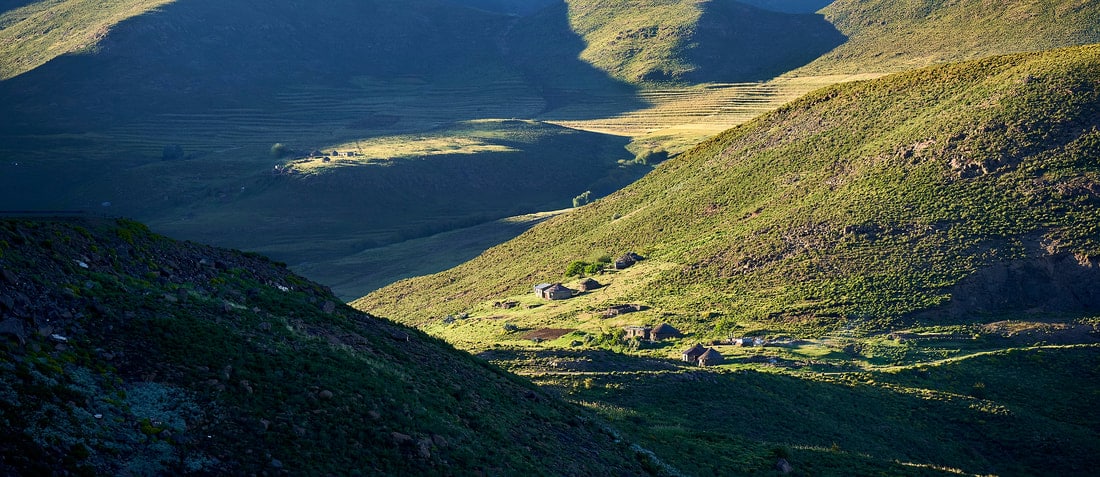
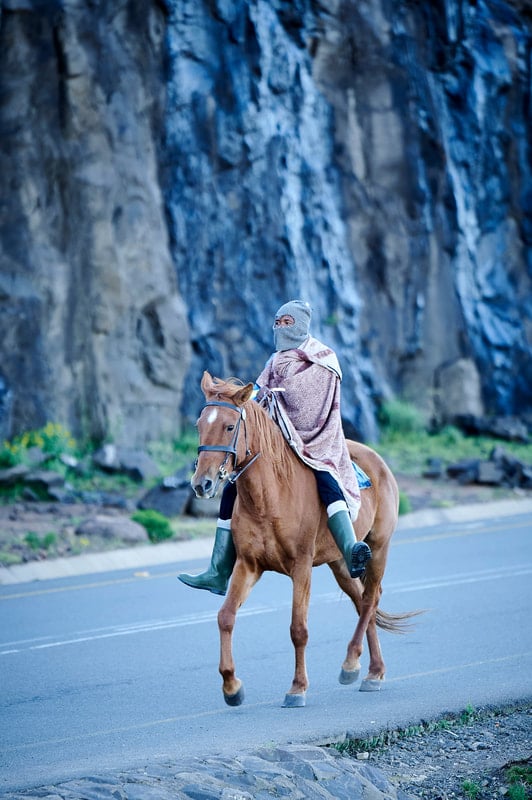
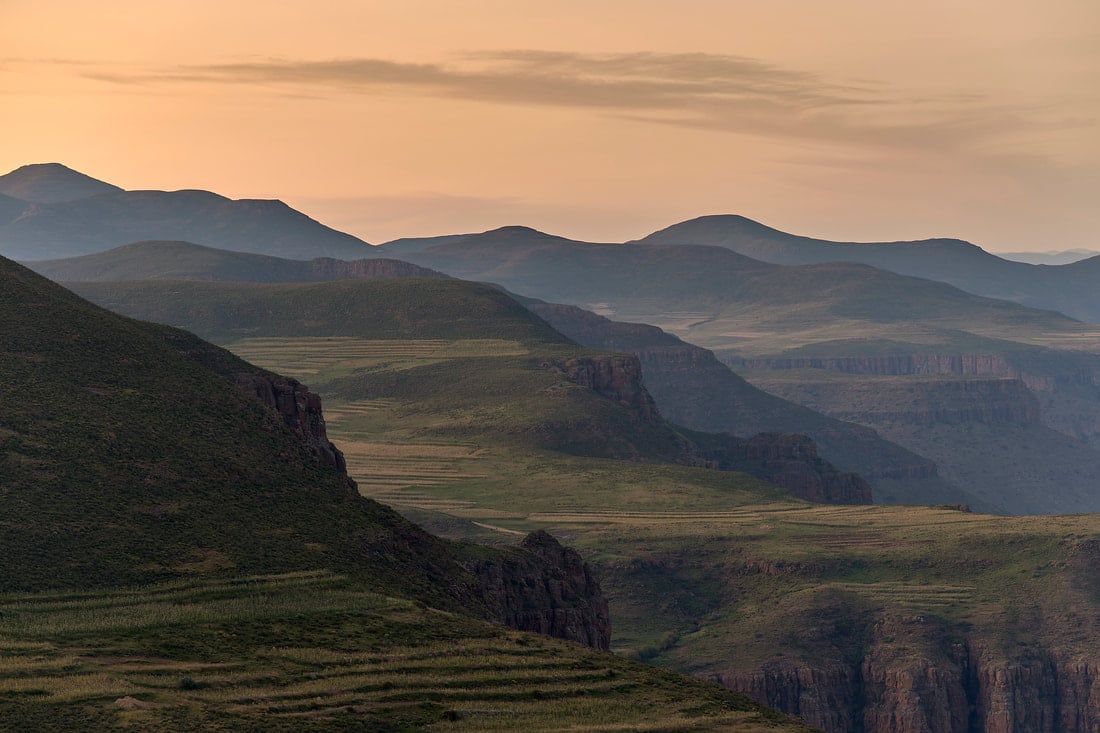
Enormous valleys and vertiginous peaks mark the entirety of the mountainous country of Lesotho. Winding roads wend in and out of folds in the mountains and the roar of rivers at the valley bottoms is a never ending feature. In all of this, terraces of maize and barley dot the slopes while villages peak out over cliff edges. Blanket cad, and gum-booted, Basotho herders on horseback tend tend to flocks of sheep and herds of cattle. Crossing the border into Lesotho is like stepping into another world.
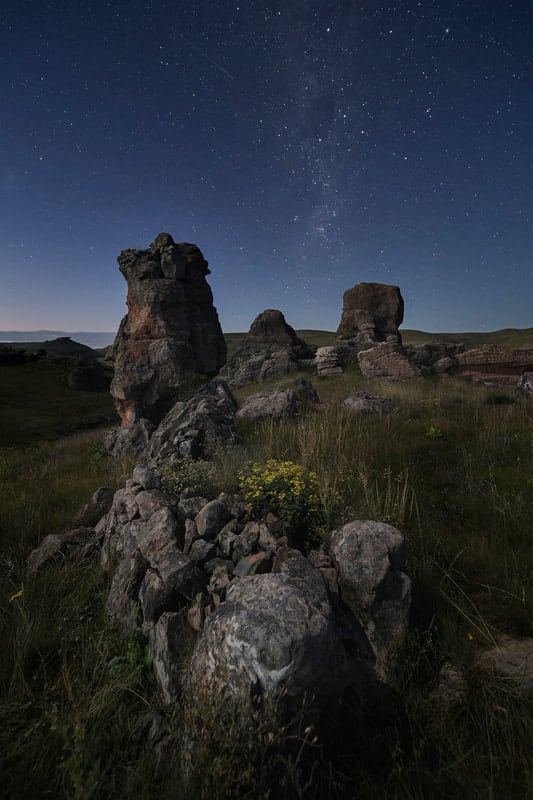
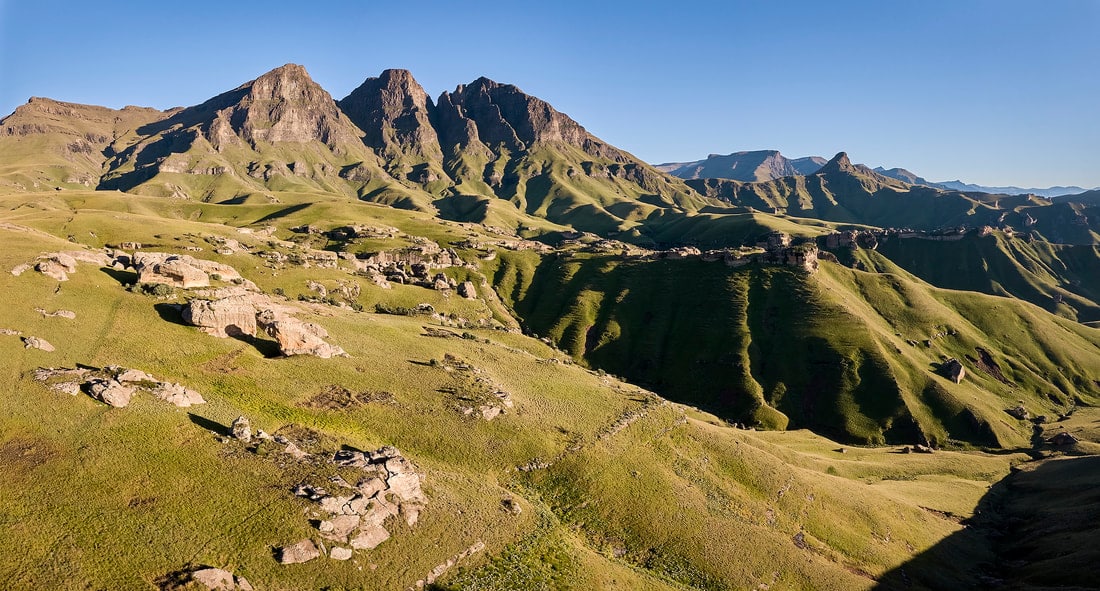
The Nature’s Light Mountain Kingdom workshop explores two of Lesotho’s most iconic locations. The first, the edge of the Maloti- Drakensberg Transfrontier National Park and World Heritage site is the fabled Sethlabathebe National Park. This is Lesotho’s first national park (declared in 1970) with it’s name literally meaning ‘Shield of the Plateau’ in Sesotho. We spend three nights on the plateau over looking the Devil’s Knuckles – a prominent three peaked mountain feature – that stand on the edge of the Drakensberg Escarpment.
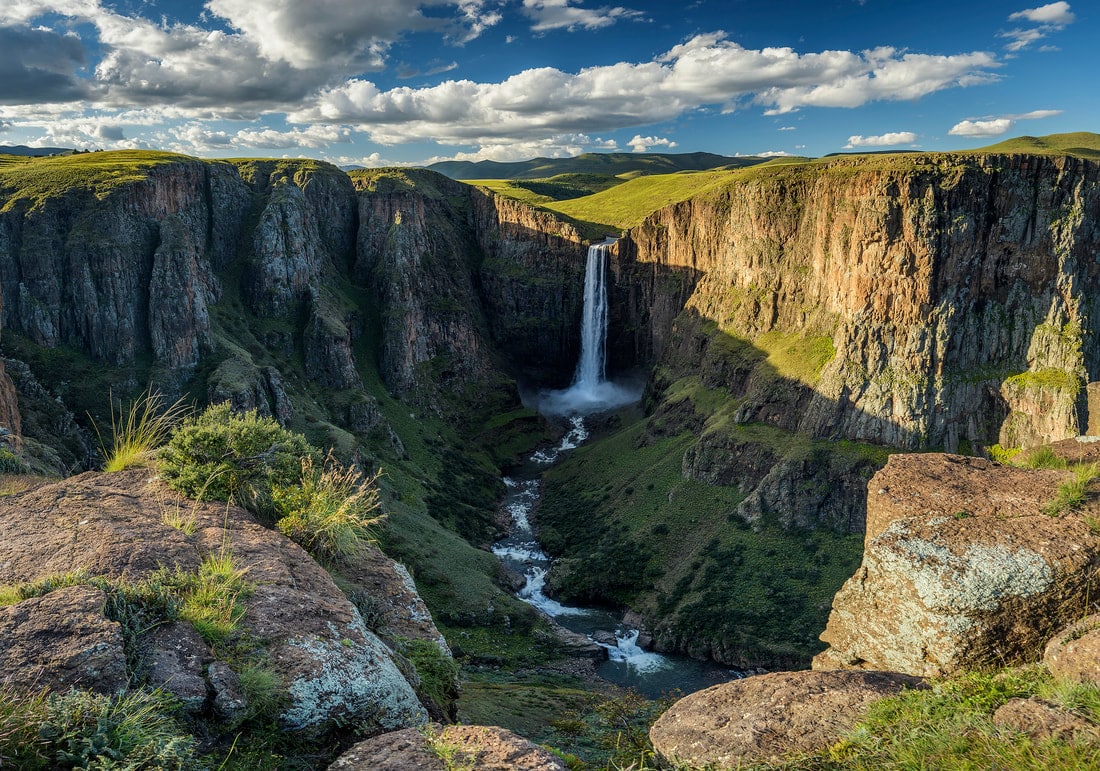
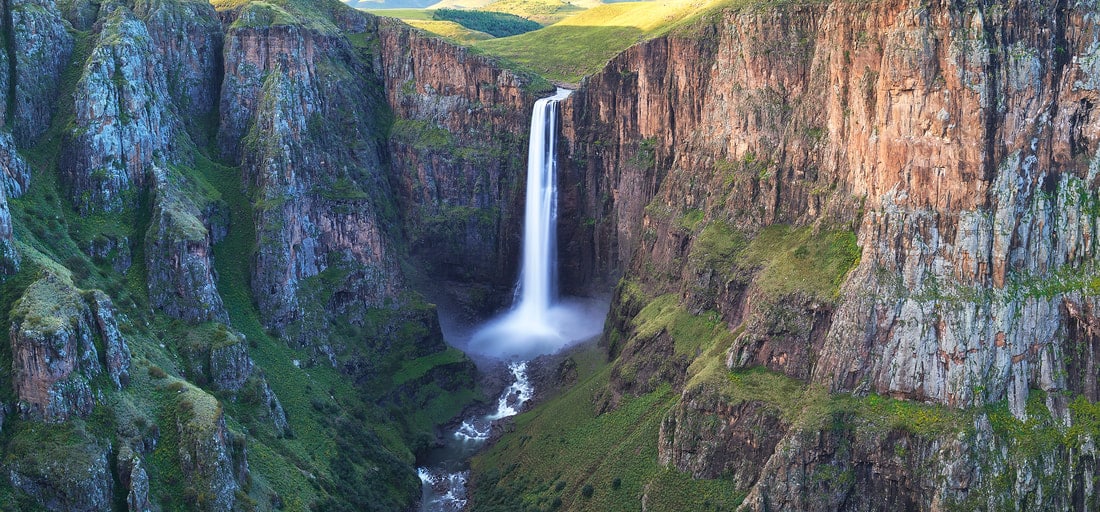
The second location is the extraordinary Maletsunyane Falls near Semonkong in the interior of Lesotho. The 192m high waterfalls are home to the world’s longest abseil (if you are interested). For photographers though, the sheer sight of the water pounding into the valley below is enough to make this is a Southern African bucket list location.
We spend two nights at the very comfortable Semonkong Lodge before heading back home.
The workshop is considered a self-drive self-camp workshop, although all meals are provided. Transport can be arranged for photographers who do not have their own four wheel drive vehicle (4×4 is absolutely essential for the Sethlabathebe leg of the trip). Travel into and out of Lesotho takes time, which is why we consider the 5 nights the shortest comfortable stay between the two locations.
Click here to book or enquire about this workshop.
DATES
LOCATION
PRICE
FOCUS
GROUP SIZE
INSTRUCTOR GUEST RATIO
DURATION
ACCOMMODATION TYPE
NUMBER OF DESTINATIONS
KEY HIGHLIGHTS
Photograph
Enjoy
Learn about
Emil regularly runs workshops and classes on Lightroom, Photo Shop layers and masking and luminosity masking. These sessions will be included in the travel itinerary for those who want to spend more time on these aspects.
ITINERARY
Daily Itinerary.
Once again, this tour is not a traditional, relaxed, holiday. Although joining photo shoots and/or teaching sessions is of course optional and you may skip some of them if you want, be prepared for some early mornings and some late nights. A typical daily itinerary looks like:
Wake up between 4:00 and 5:00am for a do a sunrise shoot (Being summer means that the days are long!).
Return for breakfast around 8:00am.
Four options (or a combination of them) depending on the day:
Lunch around 13:00pm
Three options depending on the day:
Afternoons shoot from 15:30pm to about 19:00pm (depending on location).
Dinner around 19:30 for 20:00pm.
Possible night shoot from 21:00pm onwards.
We cannot stress enough that this is not a typical lazy holiday. Some days are very long, but the rewards of joining this workshop are phenomenal. Incredible locations, wonderful camaraderie, excellent photographic guidance and unique photography opportunities make for a sensational 5 nights in the mountains that you will be talking about for years to come.
Itinerary in full
Day 1
Although on paper everything looks relatively close, as soon as you travel towards and into Lesotho distances seem to increase and time stretches out. Everything in Lesotho is long way from everything else. For this reason the first day is to all intents and purposes a travel day.
The group meets in 11h00 for a quick bite to eat before continuing onto the dirt farm roads that lead towards Ramatsilisos Border Post. This is a windy dirt road that climbs into the foothills of the Drakensberg and crests out on a lower outcrop of the mountains. From here we head up northwards along the spine of the mountains to the entrance of Sethlabathebe National Park.
A long day of driving (much of it on rough dirt roads and finishing off on a dirt track where 4×4 is essential) leads us to a comfortable camping site on the end of a marsh at the very top of the mountains. We set camp and settle in to the area for a few days of landscape photography.
Day 2
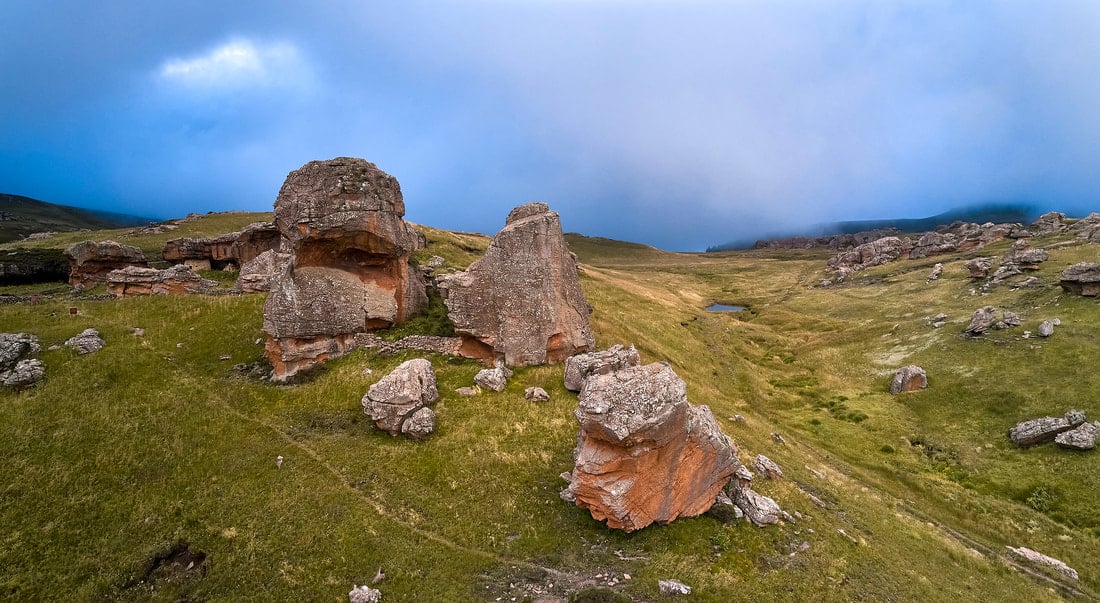
An early morning start has us walking the short 1km to the edge of the escarpment where we can watch the sunrise. The viewpoint we aim for overlooks the ‘Devil’s Knuckles’ peaks which are perfectly reflected in the still water of the numerous tarns in the area.
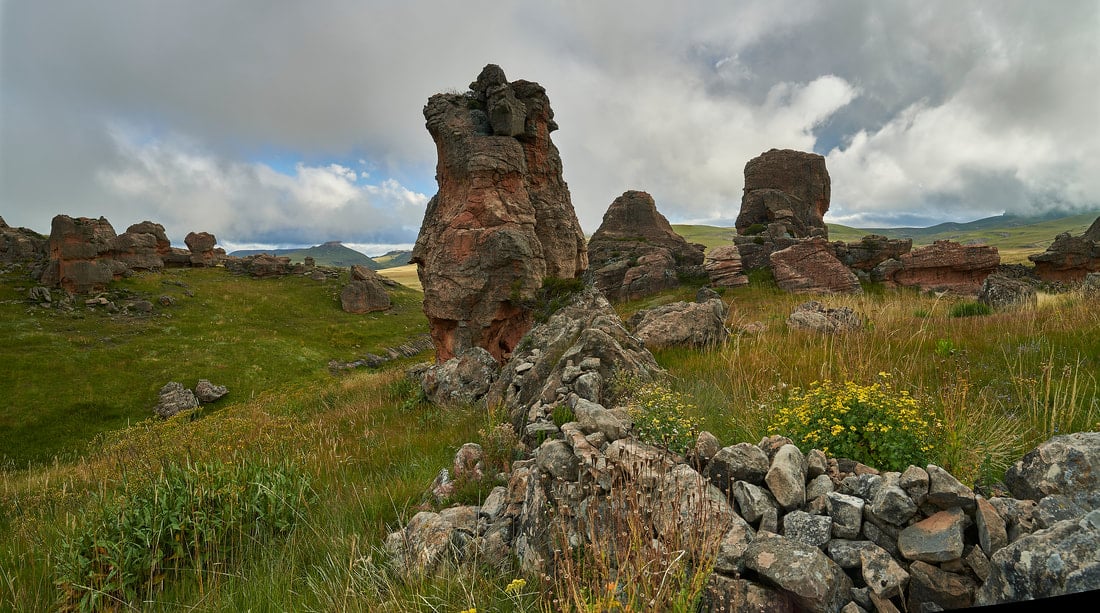
Once the sun is up, we return for a leisurely breakfast. The morning is spent scouting the various boulder formations and overhang homesteads that litter the escarpment top. The goal is to search
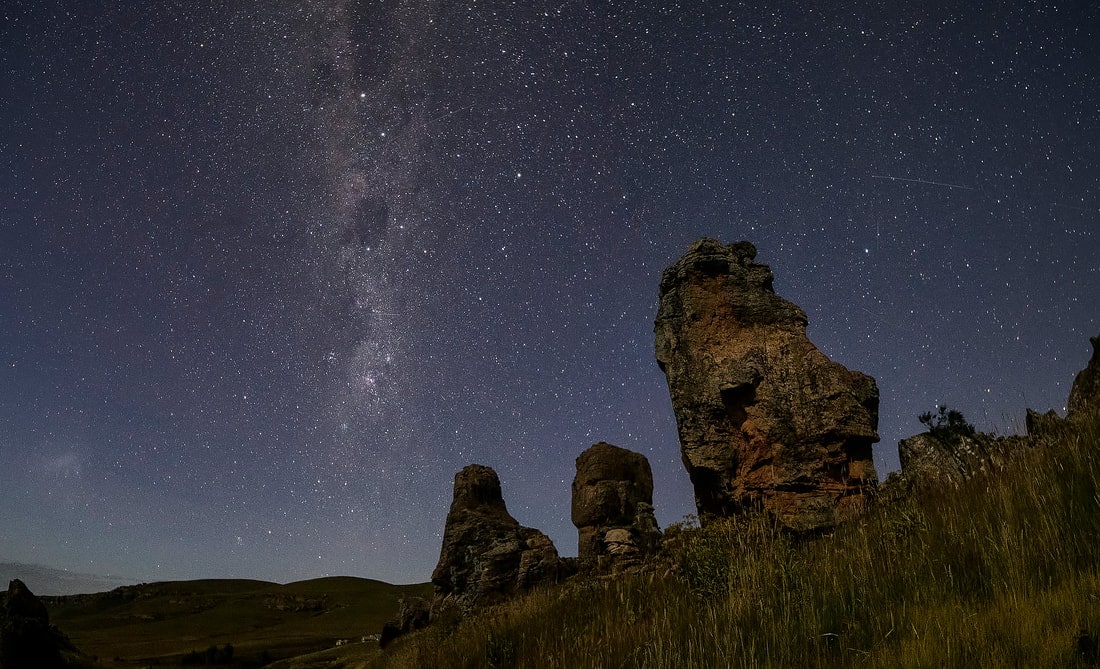
out some compositions for the afternoon and evening shoot. The moon is also waxing and gives excellent opportunity to photograph the night sky, which is on the cards weather permitting.
Day 3
A dawn shoot is followed by a decent rest as the evening would have been a long one photographing the stars. The third day follows a similar pattern to day two, allowing photographers the opportunity to photograph the changing weather and light. We do another evening shoot weather permitting.
Day 4
After our first lie-in (two nights of photographing the stars means that a decent nap is definitely a good idea), we pack up camp and start the long journey across the southern portion of Lesotho to Semonkong. This is a long drive that takes the better part of 6 hours on the road, despite only being around 200km in length (the road is currently under new construction so it is possible that the travel times will improve in 2023).
If we manage to get to Semonkong in time, we dash out to the extraordinary Maletsunyane Waterfall for sunset. This is a bumpy 30 minute drive from the lodge to the viewpoint. From here we can watch the light as it slides over the western mountains and bathes falls in a warm glow.
A drive back in the dark to the comfortable embrace of Semonkong Lodge and a round of Maluti beer at the homely restaurant attached to the Lodge.
Day 5
We head off at dawn again, this time back along the road we traveled on the previous day. The goal is to view one of lesser known waterfalls and the deep gorge as it strikes southwards. The edges of the ravines are often filled with yellow flowers this time of year, making for some extraordinary colour in the images.
A late breakfast is followed by editing and feedback sessions for the rest of the morning. For intrepid walkers there is also the option to walk into the gorge itself and see hte falls from the less viewed bottom of the gorge. After lunch we head back again to the viewpoint over Maletsunyane Falls.
After lunch we head back again to the viewpoint over Maletsunyane Falls.
Day 6: Travel Back
As mentioned at the beginning; everything in Lesotho is a long way from anywhere else. This means that the last day is essentially a travel day getting back to Durban (or other cities if photographers have joined us from other locales). A decent breakfast allows us ample time to trundle on down the winding roads along the Senqu River and back to Quacha’s Nek, from where we re-enter South Africa.
PRICE
R18,950 per person. Minimum 3 participants, maximum 6 participants. (If under 4 participants, only one photographic leader with an assistant will conduct the tour).
Single Supplement: R1 200, subject to availability.
Compared to similar workshops the Mountain Kingdom photographic workshop is competitvely priced (the instructors on this tour do it for the love of photography and the mountains first and foremost). The interior of Lesotho as a destination is not cheap to get to regardless of the fact that we are camping. Transport for the instructors as well as all food and accommodation for the group during the tour – and it is easy to see why the basic costs of running the workshop are in fact quite high.
We are confident in our best value for money approach, where we don’t cut on quality, offer a pretty much all-inclusive tour at a fair price. Given that the tour leaders are South Africans and that South African salaries and taxes are considerably lower than their European counterparts, we are able to pass this saving on as a rather more competitive price.
ENQUIRY FORM
Hunters of Light is an initiative to help motivate and inspire photographers. We welcome photographers of all skill levels and all camera brands, this group is all about creating beautiful images.
The Hunters of Light was founded by Quintin Mills, a Johannesburg photographer and videographer.
© Since 2020 Hunters of Light / Quintin Mills All rights reserved.
All trademarks mentioned are the property of their respective owners.